
Inflation Means Interest Rates Could Rise. Higher Interest Rates Will Make the National Debt More Expensive.

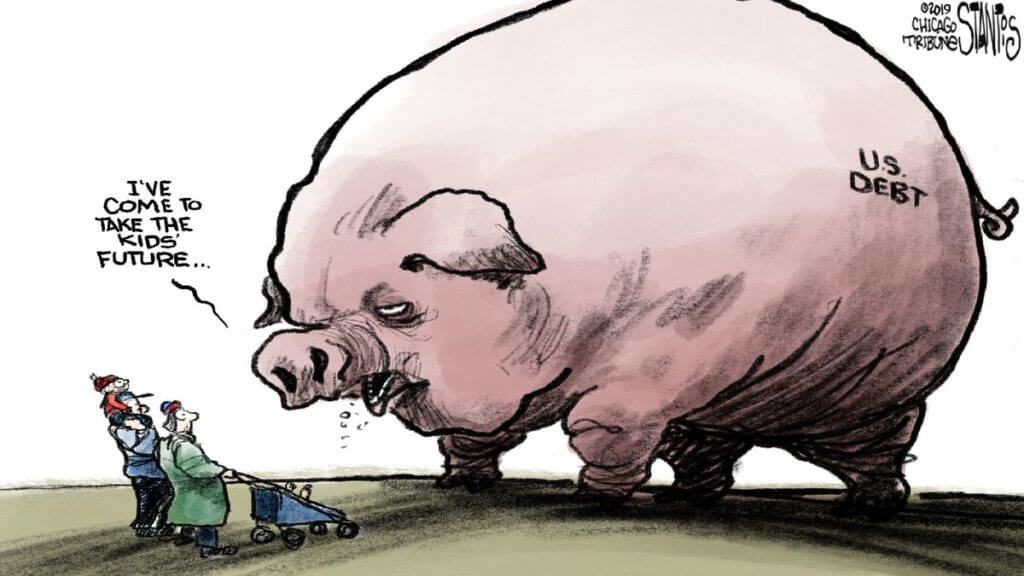
Recent comments from Federal Reserve Chair Jerome Powell hinted that the Fed may soon get serious about hitting the monetary brakes to slow the economy. Until recently, inflation was described as transitory. But at some point, that story has to change.
Price levels likely will rise into 2022. The all-item consumer price index (CPI) was up more than 5 percent on a year-over-year basis for July, August, and September. The increase for October was 6.2 percent—the largest jump since 1990. The Fed considers 2 percent inflation to be its goal. Obviously, there is a large gap between that and what we are seeing.
The producer price index, a leading indicator of consumer prices, is up even more than the CPI. It shows an 8.6 percent year-over-year increase for September and October, the largest since the series started in 2010.
It’s not just a U.S. phenomenon. But U.S. inflation outpaces inflation in the eurozone and G-20 countries, which means the dollar should remain relatively weak against those currencies. Other things equal, that makes our exports stronger and imports weaker.
Press reports often highlight rising prices for a few key items: energy, rent, and used cars. But an analysis of price movements in the July personal consumption expenditures index (PCEI), which is the Fed’s preferred inflation measuring rod, showed that 84 percent of included items were rising. The September PCEI was up 4.4 percent on a year-over-year basis, having risen from 4 percent in June—the largest monthly increase since October 1990. – READ MORE

Responses