
Soaring Rents Eat Americans’ Wage Increases… And Then Some

US headline inflation exceeded 7% in 2021. But rent increases put the Consumer Price Index to shame, soaring an average of 13.5%. And within that already-brutally-high average, there were some absolutely astounding outliers. Phoenix rents soared 25.3%, followed by Tampa, Miami, Orlando, Las Vegas, and Austin, all of which exceeded 20%.
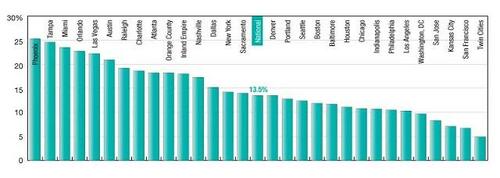
That means an Austin barista could receive a 10% salary bump and have most of it wiped out just by an increase in their rent. Add in the soaring costs of food and gasoline, and our hypothetical worker is actually losing ground despite their double-digit pay raise.
Rents do tend to rise a bit each year, with 3%-4% being typical. So how did 3% become 20%+ in so many markets? A confluence of factors, including:
Rent forbearance. State and federal programs designed to prevent evictions during the worst of the pandemic lockdowns hit landlords – who have loans of their own to pay off and can’t do so without rental income – especially hard. Many are now raising rents where they can to offset where, for over a year, they couldn’t.
General inflation. Pretty much everything required to manage rental properties – including construction materials, labor, and electricity – is up, in some cases dramatically. To stay solvent, landlords have to pass on at least some of these costs to tenants. So 7% headline inflation equals (at least) a comparable increase in rents.
Soaring home prices. As the world tipped into pandemic-induced recession in 2020, governments responded with an epic money-printing binge. The Federal Reserve’s balance sheet – a proxy for the number of newly created dollars the central bank has created and dumped into the economy – has more than doubled since 2019. Expressed another way, 40% of all the dollars ever created came into being in the first two years of the pandemic. – READ MORE



Responses